Attic temperatures in Deltona regularly hit 130 degrees Fahrenheit in summer. That number matters because it’s what flex duct joints have been working against for twenty-plus years in most of the city’s pre-2005 housing stock. When those joints start separating — and in our experience across Volusia County, they do, reliably, around year fifteen — the system keeps running, the bills keep climbing, and the problem stays hidden because it’s happening inside the walls and above the ceiling.
That’s what aeroseal HVAC air duct sealing in Deltona actually addresses. Unlike mastic brushed onto visible joints or foil tape pressed over accessible seams, Aeroseal works from the inside: a polymer-based mist travels through the duct system under pressure until it bonds at every leak point, including the ones no technician’s hand can reach. The job ends with a printed diagnostic report showing exactly how much leakage existed before and after. Not an estimate. A measurement.
We’ve run this process in thousands of Central Florida homes. Deltona’s housing stock — dense with 1980s through early 2000s construction, attic flex duct runs, and year-round HVAC demand — is the kind of market where aeroseal HVAC duct sealing services pay for themselves faster than almost anywhere else we work.
TL;DR Quick Answers
Air Duct Sealing in Deltona
Air duct sealing in Deltona closes leaks inside your home's duct system so your HVAC equipment actually delivers conditioned air to the rooms you're cooling, instead of losing it to the attic. Most of the city's pre-2005 homes rely on flex duct systems that have been working against 130-degree attic temperatures for two decades or more. That thermal stress separates duct joints over time, and in our experience across Volusia County, leakage rates above 20 percent are common in homes of that era.
What it fixes: Conditioned air escaping into unconditioned attic space before reaching the living area, causing high utility bills and rooms that won't reach setpoint.
How it works: A non-toxic polymer sealant travels through the pressurized duct system as a mist and bonds at every leak point from the inside, including joints no technician's hand can reach.
What Deltona homes face: Pre-2005 flex duct construction, year-round HVAC operation, and subtropical humidity combine to accelerate joint separation faster than in cooler climates.
What the job produces: A printed before-and-after diagnostic report showing leakage in cubic feet per minute, not a verbal estimate of improvement.
Who performs it: Florida-licensed HVAC contractors, verifiable at MyFloridaLicense.com.
What it costs: Varies by home size, duct zone count, and severity of leakage. A free on-site estimate includes a baseline leakage measurement so the cost conversation is grounded in actual data, not a ballpark figure.
Top Takeaways
Deltona’s pre-2005 homes are the highest-risk category. Flex duct systems installed during the city’s 1980s–2000s development boom degrade predictably. Joint separations and liner collapses are routine findings at year 15 to 20 of service life.
Aeroseal reaches the leaks no technician’s hands can. Accessible joints account for a fraction of total leakage. The real losses happen at interior connections, transitions, and flex duct collars, and that’s exactly where Aeroseal delivers.
Every job ends with a printed diagnostic report. The Aeroseal system itself generates the before-and-after leakage measurements, giving homeowners a data record they can keep. Not a verbal estimate of improvement.
Deltona’s year-round cooling load amplifies the return. With ten to twelve months of meaningful HVAC operation per year, every percentage point of duct leakage we close translates to more savings than it would in a climate with a shorter season.
Florida-licensed contractors only. Our HVAC technicians are licensed through the Florida Department of Business and Professional Regulation and verifiable at MyFloridaLicense.com before any job begins.
Diagnosis, sealing, and verification happen in a single visit. We don’t schedule a diagnostic appointment and a service appointment separately. The Aeroseal process covers all three.
Why Deltona Homes Lose So Much Conditioned Air
Between the late 1970s and the mid-2000s, Deltona added tens of thousands of homes, most of them built with flex duct systems running through unconditioned attic space. That construction method was code-compliant and cost-effective at the time. It also created a structural vulnerability that Central Florida’s climate amplifies in a very specific way.
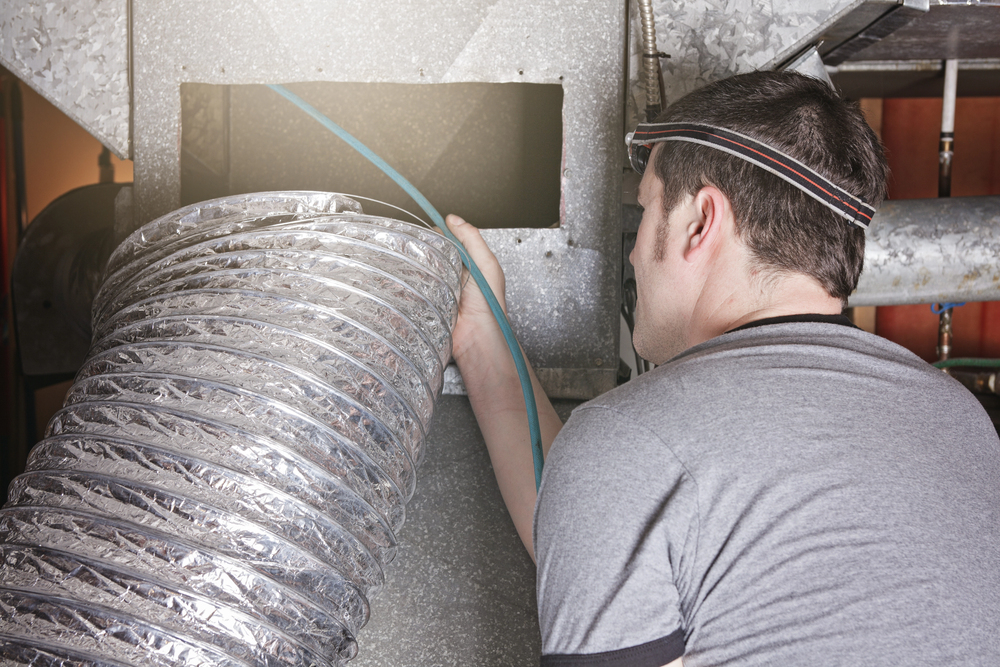
Attic temperatures here routinely exceed 130 degrees Fahrenheit during summer months. Flex duct material expands and contracts with every thermal cycle. Over fifteen to twenty years, the connection points between flex sections, at boot collars and at plenum transitions, begin to separate. This isn’t a function of installation quality. It’s physics, applied relentlessly across a very long season.
When those separations open on the supply side, conditioned air exits the duct before it reaches the register and goes straight into the attic instead. On the return side, the system pulls hot, humid, unfiltered attic air back into the air handler. Homeowners feel it as rooms that won’t reach setpoint, indoor humidity that doesn’t drop the way it should, and utility bills that keep climbing on a system they’ve had serviced. Duke Energy and OUC customers across Deltona know this pattern well: the equipment runs longer, the bills go up, and comfort doesn’t follow.
What the Aeroseal Process Actually Looks Like
When we arrive for an aeroseal HVAC duct sealing service in Deltona, we start with a pressurization diagnostic. We seal the registers, pressurize the system, and measure baseline leakage in CFM (cubic feet per minute). That number becomes the “before” figure on the final report.
We then introduce the sealant mist through the air handler. The pressurized system pushes the mist through the duct network, and the polymer particles follow the path of least resistance, which is exactly where air was escaping. At every leak point, the particles accumulate, overlap, and bond into a flexible seal. We monitor leakage levels in real time until the system reaches the target sealing threshold.
Then we re-measure. The printed report shows the before CFM, the after CFM, and the percentage of leakage eliminated. In our experience across thousands of Central Florida service calls, homes with pre-existing leakage rates above 20 percent routinely see reductions to four percent or below. The homeowner keeps the report. It’s a permanent record of the work, and for anyone selling a house, verifiable evidence of a real home performance improvement.
HVAC Duct Sealing Cost in Deltona: What Shapes the Price
We don’t publish a flat fee for aeroseal HVAC duct sealing in Deltona because the variables that determine scope are real and significant. Home square footage sets the baseline. A 1,400-square-foot Deltona Lakes ranch and a 2,800-square-foot two-story home in Saxon Village have fundamentally different duct networks, and attic accessibility, duct zone count, and severity of measured leakage all affect time and material requirements.
For most Deltona homes with meaningful duct leakage, the service cost comes back through energy savings within a timeframe that makes the math easy to evaluate. We walk through that calculation during the free on-site estimate, using your actual home, your actual utility history, and the baseline leakage measurement we take that day. No pressure. No ballpark figures applied to a house we haven’t seen.
Why Deltona Specifically Makes Duct Sealing a High-Priority Investment
Deltona sits in a subtropical zone where humidity doesn’t break for most of the year. Situated in Volusia County with the St. Johns River basin to the east and Lake Monroe to the northwest, the city runs an oak pollen season that stretches deep into spring and generates particulate load that sealed duct systems handle far better than leaking ones. Moisture infiltrating through return-side gaps goes straight past the filter and into the air handler.
For homeowners on Duke Energy or OUC service, running an HVAC system that loses 25 percent of its output is a concrete monthly cost. Multiply that across ten to twelve months of active cooling season, compounded year over year, and the number becomes significant quickly. We’ve worked in this market long enough to say this plainly: duct leakage in Deltona homes built before 2005 is the norm, not the exception, and it’s reliably fixable with the right process.
“In Deltona, the diagnostic numbers almost never surprise me anymore — older flex duct systems in these attics leak at rates most homeowners can’t see but absolutely feel every month on their bill. What does still get a reaction is showing them the after report: when a house that was losing 28 percent of its air output drops to under four percent in the same visit, that’s not a small adjustment — that’s a fundamentally different home.”
Essential Resources
1. Understand Exactly How Duct Leakage Drains Your Energy Budget
The U.S. Department of Energy’s dedicated duct efficiency page breaks down how leaky duct systems drive up heating and cooling costs and what a properly sealed system actually delivers.
Source: energy.gov — Minimizing Energy Losses in Ducts
2. ENERGY STAR’s Homeowner Guide to Duct Sealing
ENERGY STAR walks homeowners through the signs of duct leakage, what professional sealing involves, and the efficiency gains a well-sealed system delivers. Clear, authoritative, and directly applicable to Deltona homes with older duct systems.
Source: energystar.gov — Duct Sealing
3. EPA Indoor Air Quality: How Duct Conditions Affect What You Breathe
The EPA’s indoor air quality resource covers how duct system gaps allow contaminant entry, including pollutants drawn through return-side leaks. Relevant for any Deltona homeowner concerned about air quality beyond energy performance.
Source: epa.gov — Should You Have the Air Ducts in Your Home Cleaned?
4. EPA: Why Duct Sealing Is a Core Component of IAQ and Weatherization
This EPA resource connects air sealing and duct integrity directly to indoor air quality outcomes, explaining why sealing leaks matters for Florida families beyond just energy savings.
Source: epa.gov — Energy, Weatherization, and Indoor Air Quality
5. Verify Your HVAC Contractor’s Florida License Before Any Work Begins
Florida’s Department of Business and Professional Regulation maintains a live, searchable license database for all HVAC contractors in the state. We encourage every Deltona homeowner to check before scheduling any service, including ours.
Source: MyFloridaLicense.com — Florida DBPR License Verification
6. EPA HVAC and Indoor Air Quality Design Standards
This EPA resource explains how sealed duct systems affect indoor air quality outcomes, including how leakage creates pressure imbalances that pull unfiltered air from unconditioned spaces into the living environment.
Source: epa.gov — HVAC Systems and Indoor Air Quality
7. Deltona, Florida — City Overview and Community Context
Deltona is Volusia County’s largest city, incorporated in 2002 after decades of rapid residential development. The city’s growth history and housing stock context are directly relevant to understanding why duct leakage is so prevalent here.
Source: Wikipedia — Deltona, Florida
Supporting Statistics
Stat 1: 20–30% of conditioned air is lost in a typical home’s duct system
The U.S. Department of Energy reports that in a typical house, about 20 to 30 percent of the air moving through the duct system is lost through leaks, holes, and poorly connected ducts, resulting in higher utility bills and difficulty maintaining comfort regardless of thermostat settings.
Source: energy.gov — Minimizing Energy Losses in Ducts
Stat 2: Leaky ducts can reduce heating and cooling efficiency by as much as 20 percent
ENERGY STAR reports that leaky ducts can reduce a home’s heating and cooling system efficiency by as much as 20 percent, and that sealing and insulating ducts increases efficiency, lowers energy bills, and often pays for itself through energy savings.
Source: energystar.gov — Duct Sealing
Stat 3: Duct air leakage worsens indoor air quality by drawing unfiltered air from unconditioned spaces
The EPA identifies air leakage from HVAC duct systems as a significant contributor to indoor air quality problems, including unexpected airflow between conditioned and unconditioned spaces, and condensation in building cavities from humid air infiltrating through leaking return ducts. In Florida’s subtropical climate, that’s not a theoretical risk.
Source: epa.gov — HVAC Systems and Indoor Air Quality
Final Thoughts and Opinion
We work across a lot of Central Florida markets. Deltona is one of the few where we rarely need to make the case — the housing timeline does it for us. Nearly all residential development was compressed into a twenty-to-thirty-year window, which means a significant share of the stock has now crossed the threshold where flex duct systems begin failing in ways that show up on a utility bill. Stack year-round HVAC operation and a subtropical climate on top of that, and duct leakage stops being a possibility to consider and starts being a probability to test for.
What we’d tell any Deltona homeowner thinking this through: the diagnostic is the starting point, not a commitment. We’ve run the pressurization test on houses that turned out to be in better shape than their bills suggested, and we’ve told those homeowners exactly that. The Aeroseal report goes both ways. For the homes where leakage is significant — and in Deltona, that’s most of them built before 2005 — the service pays for itself in a timeframe that makes the decision straightforward. We’ve seen it often enough to say that plainly.

Frequently Asked Questions
How does Aeroseal HVAC duct sealing work in Deltona homes?
We start with a pressurization diagnostic that establishes baseline leakage in cubic feet per minute. We seal all registers, pressurize the system, and introduce a non-toxic polymer sealant as a mist through the air handler. The pressurized air carries the mist to every leak point, joints, collar connections, flex separations, where the polymer particles accumulate and bond into a flexible seal. We run the process until real-time monitoring shows the target threshold is reached, then re-test the system and generate a printed report documenting the before-and-after results.
What is the typical cost of HVAC duct sealing in Deltona, FL?
There’s no honest flat-rate answer because the variables are real and significant. Home square footage, duct zone count, severity of existing leakage, and attic access all affect scope and time. We provide a free on-site estimate that includes a baseline leakage measurement, so the cost conversation is grounded in actual data about your specific home rather than an average applied from somewhere else.
How long does Aeroseal duct sealing last?
Aeroseal carries a 10-year manufacturer warranty on the sealant material. Independent testing has confirmed the polymer bond holds well beyond that window under normal residential operating conditions. Given that Central Florida HVAC systems run nearly year-round and put continuous thermal stress on duct materials, the durability of an internal polymer seal far outperforms surface-applied tape solutions.
Will duct sealing lower my utility bills with Duke Energy or OUC?
For homes with meaningful pre-existing leakage, which covers a large share of Deltona’s pre-2005 housing stock, yes, measurably. When a system stops losing 20 to 30 percent of its conditioned output into an unconditioned attic, it delivers more of what it produces into the living space. The system runs fewer cycles to maintain setpoint, and monthly energy consumption drops. The printed Aeroseal diagnostic report provides the before-and-after leakage data that makes projected savings calculable rather than guessed.
Do I need to leave my home during the Aeroseal process?
You don’t need to leave. The sealant material is UL-listed, non-toxic, and non-irritating. We ask that you stay out of the immediate work area, usually the mechanical room or utility space, during pressurization for comfort. The rest of the home stays fully accessible throughout the service.
How do I know if my Deltona home’s ducts are leaking?
A professional pressurization test gives you the precise answer, measured in CFM. Short of that, common indicators we see in Deltona homes include rooms that won’t reach thermostat setpoint while others overcool, utility bills that keep climbing despite a recently serviced system, persistent indoor humidity during months when the HVAC is running consistently, and visible disconnections or sagging in any accessible flex duct runs in the attic.
Is Aeroseal different from traditional duct sealing methods?
Substantially. Traditional methods, mastic brushed onto joints or foil tape pressed over seams, work only on surfaces a technician can physically reach. That’s a fraction of where actual leakage occurs. The Aeroseal sealant mist travels through the duct system under pressure, reaching interior connection points, mid-run flex separations, and collar gaps that no manual application can access. The outcome is whole-system sealing rather than surface-level patching.
How do I verify your HVAC license in Florida?
Florida HVAC contractors are licensed through the Department of Business and Professional Regulation (DBPR). Any licensed contractor working in Deltona, including our team, can be verified by name or license number at MyFloridaLicense.com. We actively encourage every homeowner to check before scheduling any HVAC service.
Ready to Find Out What Your Ducts Are Losing?
A lot of Deltona homeowners come to us after months of blaming the equipment for bills and comfort issues that were actually coming from the duct system. The diagnostic is the first step — it tells you exactly what’s happening, with no obligation to move forward.
Here is the nearest branch location serving the Doral FL area…
Filterbuy HVAC Solutions - Miami FL
1300 S Miami Ave Unit 4806, Miami, FL 33130
(305) 306-5027